
The Invisible Effort Behind Your Teen's "I Just Want to Stay Home"
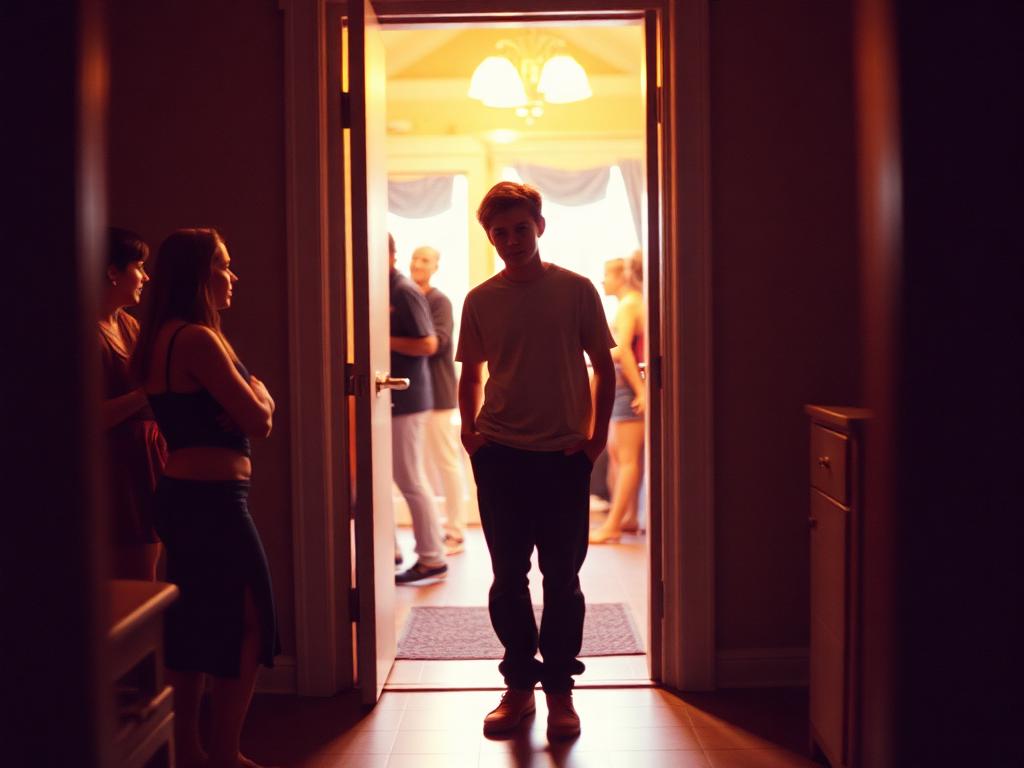
You watched your teen freeze at the door of the party, and you felt that familiar ache. You know there's a warm, funny, interesting kid in there, and you just want the world to see it too. Before the next "I don't want to go," let me show you what that moment might actually feel like from the inside.
A Room Is Never Just a Room
For many teens with autism or ADHD, the brain doesn't quietly filter out background noise the way a lot of people's brains do. The hum of the lights, three conversations at once, a chair scraping, someone's strong cologne. It all arrives at roughly the same volume.
Imagine trying to follow one conversation while every other sound in the room demands equal attention. That's not your teen being dramatic or antisocial. That's a nervous system doing twice the work just to stand in the room.
By the time they're actually expected to talk, a big chunk of their energy is already spent.
The Conversation Behind the Conversation
Now add the social layer. When do I jump in? Was that a joke? What do I do with my hands? Did I hold eye contact too long, or not long enough?
For a lot of teens, this read-the-room work happens consciously and manually, one calculation at a time, while everyone else seems to do it on autopilot. It's like translating a language in real time while pretending you're fluent. It's doable. It's also exhausting.
So when your teen says a thirty-minute hangout "wore them out," believe them. It genuinely did.
Masking: The Performance That Costs the Most
Here's the part that breaks a lot of parents' hearts once they see it. Many teens with autism or ADHD learn to mask, which means hiding the things that make them stand out. They force eye contact, copy other kids' reactions, and swallow the quirks and habits that actually help them cope.
Masking can look like "doing fine." It is anything but free. The teen who held it together all day is often the same teen who falls apart the moment they walk through your door.
That after-school meltdown isn't a sign you did something wrong. It's a sign of how hard they worked to be okay everywhere else, and proof that home is the one place safe enough to finally let go.
What Actually Helps
You can't remove every hard thing, but you can make the world feel a lot more survivable:
- Validate before you problem-solve. "That sounds like a lot" lands better than "it's not a big deal."
- Build in recovery time. Don't stack social plans back to back. Downtime isn't laziness, it's refueling.
- Offer a real exit plan. A code word or an honest "we can leave anytime" makes saying yes far less scary.
- Name the effort, not just the outcome. "I saw how hard that was, and you still did it" is the kind of thing a teen remembers for years.
- Shrink the variables. Smaller, calmer, interest-based settings ask for far less masking than a loud crowd.
Why This One Shift Changes Everything
When your teen feels understood instead of managed, something softens. They stop bracing for the next correction and start trusting that you're on their team.
That trust is the ground everything else grows from. A teen who feels understood at home is a teen with the courage to be themselves out in the world.
At Social Connections, we build small, interest-based groups in DFW designed to ask for less masking and offer more belonging. No diagnosis required. Join our email list to hear when our next group opens.