
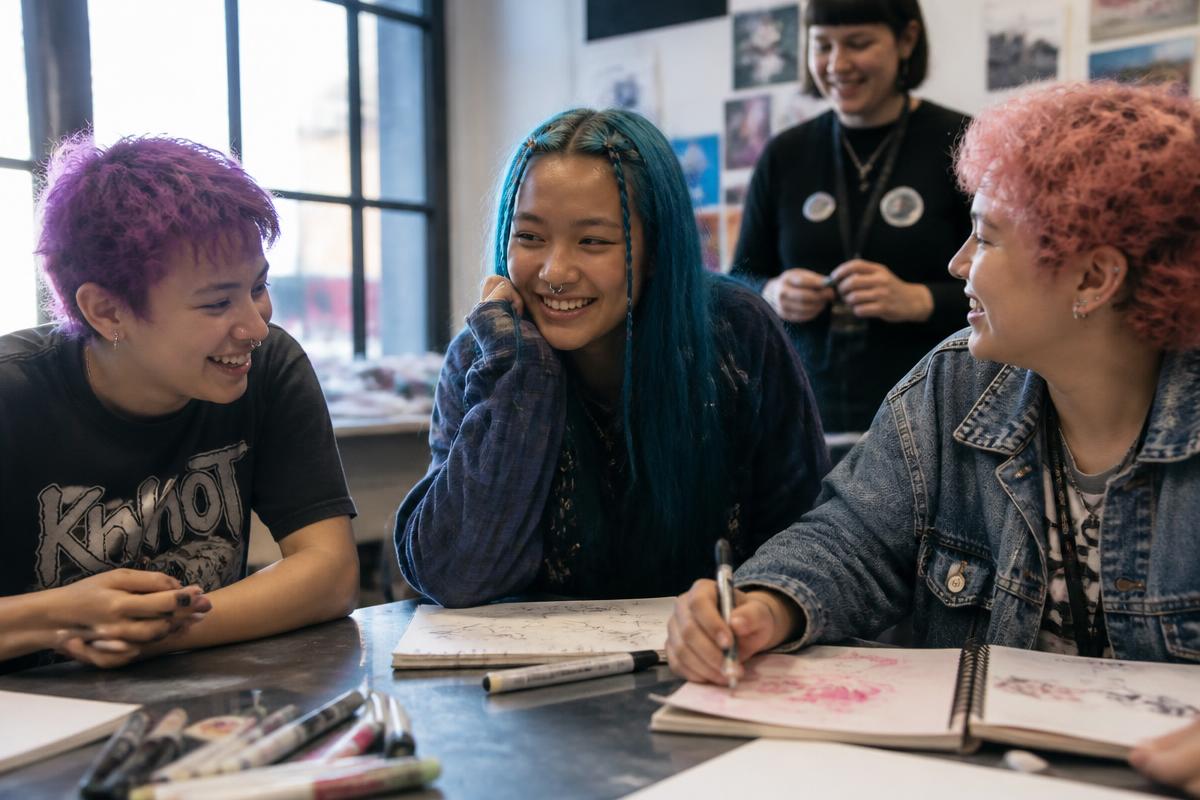
Finally, a group your teen will actually want to go back to.
Small in-person groups where neurodivergent teens practice social skills around something they love, alongside people who actually get them.
No diagnosis, no referral, no membership.
See upcoming groupsIs this your teen?
If more than one of these makes you go "oh no, that's mine"... keep reading.
- Hilarious at home. Total ghost the second there are more than three humans in a room.
- Has a deep, possibly concerning relationship with their bedroom. And the Wi-Fi.
- ADHD, autism, anxiety, or just wired a little different. Pick one. Or all three.
- Homeschooled and quietly wondering where on earth other teens actually hang out.
- Tried the youth group. The rec league. Came home with zero friends and a snack wrapper.
- Their best friend is the dog. The dog is thriving. Your teen, less so.
Yeah. We know that teen. We like that teen. We built this whole thing for that teen.
Built for the neurodivergent introvert. Open to any teen who wants in.
Neurodivergent is a bigger tent than most people realize, and plenty of teens standing in it have never been assessed for a single thing. No label required at the door.
And introvert doesn't mean shy. It means the social battery drains fast and refills slow. Your teen can talk for four hours straight about one extremely specific topic and then need the whole weekend to recover. Both things are true. Neither one is a problem.
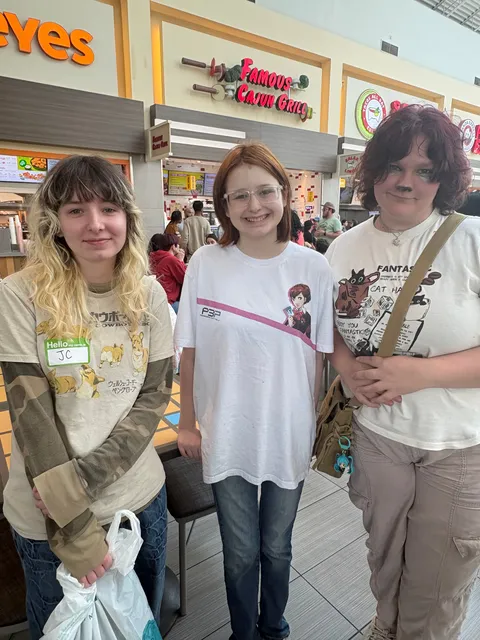
You've already tried something
Maybe it was a group at a clinic. Maybe it was counseling. Maybe it was a program with a curriculum and worksheets and a certificate at the end.
Maybe your teen went twice and then wouldn't get in the car again.
Or maybe they finished the whole thing, and nothing changed. Still in their room. Still nobody texting.
You paid for that. You're allowed to be suspicious of us.
Here's what usually went wrong, and it's almost never the teen:
- They learned what to say in a room with nobody to say it to.
- Nobody introduced them, so they sat there.
- It felt like therapy, so they quit.
- It was loud and crowded and they shut down before they had a chance.
Every one of those is a design problem.
Nothing else is built quite like this
Therapy helps. One on one with a good counselor is the right call for a lot of teens, and it's still a room with no peers in it.
Clinic groups help too. Plenty of teens do well practicing conversation through structured role play. If that's working for your teen, keep going. We mean that.
Community meetups and homeschool groups have real teens and real interests and almost no structure. Some kids thrive in that. Others walk in, find there's nothing to do, and stand against the wall for an hour.
Some teens need all three at once. Real peers, a professional in the room, and something to actually do the whole time. That's the gap, and that's where we sit.
What happens in a group
One skill, one strategy.
Every group starts with one simple social skill, like how to join a conversation, and one coping strategy your teen can actually use when nerves hit. Affirmations, grounding, breathing, whatever works for them.
Then they do something they picked.
The activities come from the teens themselves, so there's always something to talk about that isn't small talk.
Nobody is put on the spot.
Teens participate at whatever level they're ready for, and by the end of almost every group, everyone has found their way into the conversation.
What we've heard...
"He honestly loved it! That is so rare for him. I think knowing he would be with others who had the potential to understand him really settled his social anxiety. He is really excited to go to the next one."
"He loved it! I don't know what magic that was but that was the first time in so long he has come out of a group event actually saying he had an amazing time and wants to go back! Can we sign up for another?"
"I was honestly scared to sign her up. She has so much anxiety, and group settings feel impossible for her. But she went back. And then she actually talked. Out loud. In front of other people. And I cried. Not because she suddenly became outgoing, but because she didn't feel like she had to hide who she is to belong somewhere."
The stuff that's hard to practice anywhere else
None of this is taught at a whiteboard. These are the moments that come up on their own when teens are building something together, and there's always someone there when they do.
Saying an idea out loud.
Somebody suggests a name for the character. It's a good one, and everyone says so, and nobody makes it weird.
Working next to someone.
Two teens at the same table, both concentrating, occasionally passing the good scissors back and forth. That's a real thing and it counts as connection.
Starting a conversation and staying in it.
Starting one is hard. Keeping it going past the first exchange is harder, and that's the part your teen gets to practice here.
Trying a coping strategy and deciding if it works.
What calms one teen down does absolutely nothing for another. Your teen gets to try them and rate them and keep the ones that actually help.
Some teens need something more direct
A group is the right place to practice. It doesn't cover everything.
Our coaches work one on one with teens and young adults, virtually, on the parts of growing up that nobody really teaches. Getting started on something and finishing it. Handling a big feeling before it takes over. Speaking up for yourself. Managing your own time. Figuring out what happens after high school, and building the skills to get there.
All coaching sessions are held over a secure video call, so your teen can meet from anywhere they feel comfortable.
See how coaching works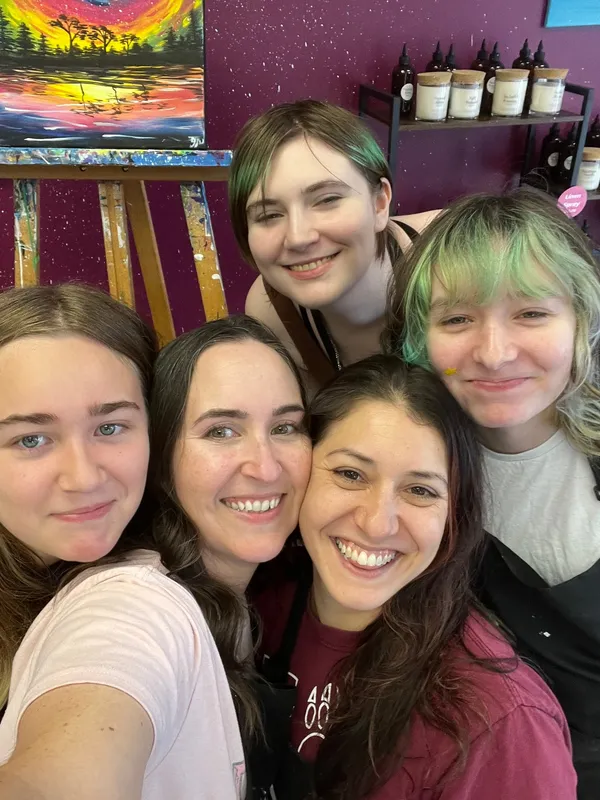
What we believe
Social Connections exists to build belonging for teens who have never quite fit. We create welcoming, interest-based spaces where teens can show up as themselves, find their people, and practice social skills in real moments.
Belonging
Your teen doesn't earn a spot here by behaving a certain way. They have one when they walk in.
Community
The same faces, week after week. That's not a scheduling detail, it's the whole mechanism.
Authenticity
Nobody here is being taught to seem more normal. Masking is exhausting, and your teen shouldn't have to do it to be welcome somewhere.
Kindness
Teens are a lot kinder to each other than adults expect them to be. It just takes a room where nobody has to compete for a spot, and that's the room we build.
Growth
Small, real things. Sat with the group instead of on the edge. Answered a question instead of nodding. We think that's worth celebrating.
Register through our Hub. It only takes a couple of minutes, and you'll be notified as groups get scheduled.
Register for a workshop